
https://pagead2.googlesyndication.com/pagead/js/adsbygoogle.js?client=ca-pub-4000887400212447
The Branded Hotel: The Interview Room is the second instalment in the The Branded Hotel short-story series, continuing Sal’s story several years after the events of the first story.
Ten years have passed since the night at the hotel, but the past has not disappeared. Sal has moved on, built a new life and begun to confront the lasting effects of trauma, while the Police Officer whose actions shaped that night has continued to build a successful career behind the protection of his rank and reputation.
As his professional influence grows, so does his ability to manipulate people, access information and exert control from behind the badge. When Sal’s name unexpectedly resurfaces during a police interview, the past and present begin to collide.
The Interview Room explores police corruption, abuse of authority, trauma, sexual violence, institutional power and the long-term consequences of failing to protect victims. It also examines how outward respectability can conceal manipulation, coercion and deeply troubling behaviour.
Fiction disclaimer: The Branded Hotel: The Interview Room is a work of fictional short-story writing. The characters, events, organisations and circumstances depicted are fictionalised for literary purposes. Any resemblance to real people, living or deceased, or actual events is coincidental. The story contains mature themes, including sexual violence, abuse, trauma, coercion and police misconduct.
Explicit Content Warning
Alison Little completed a Diploma in Creative Writing with Upskillist undertaking a range of modules that contributed to the development and crafting of The Branded Hotel: The Interview Room.

Upskillist
The Branded Hotel: The Interview Room
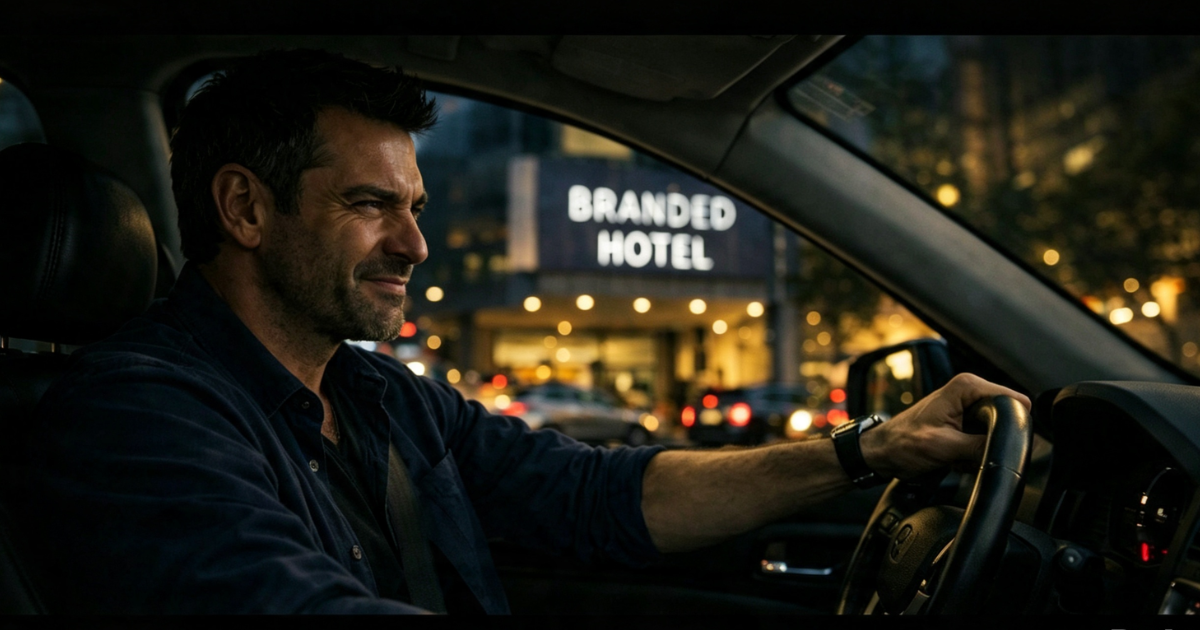
A smile tugged at the corner of his mouth as he drove past the Branded Hotel, taking care with the other vehicles on the road. Ten years, he thought. It must be ten years since that morning.
His daughter had been at nursery school then. Now she was settled at the girls’ grammar school—not the nearest one, but the one with the better reputation. His wife dropped her off and collected her each day. She had a little job, although she didn’t really need to work. He paid the mortgage and the bills, and the police paid him considerably more than the Army ever had.
They had offered him the equivalent of his former Officer’s Rank when he joined, and he had risen quickly. The salary had followed.

His daughter had done well at school, even becoming a prefect, head prefect for year 9 in fact. She wasn’t particularly popular, but that was what happened when you had authority, he told himself. Perhaps she would follow in his footsteps after university—policing, teaching, something respectable.
Something with standing.
He was pleased they had left the Army before she had started school. Wherever they had been stationed, the children of officers tended to be grouped together, although academically able children were placed according to their ability. It had been much the same at her primary school.
Now she was at the grammar school, that wasn’t an issue.
They had paid for extra tuition during the holidays to make sure she passed the 11+. Still cheaper than private school.
The traffic slowed ahead.
He looked towards the hotel again.
The memory came back immediately.
He remembered Sal trying to get dressed. He remembered pretending to sleep. He remembered the excuse she had invented about being called into work, and the way he had challenged her.
Most of all, he remembered the shouting.
The memory produced the familiar physical reaction.
He recognised it and allowed himself a small smile.
A young woman walked along the pavement outside the hotel. For a moment, from behind, she reminded him of Sal.
His face flushed and his groin tightened.
He looked away and concentrated on the traffic.
Sal.
He wondered where she was now.
Settled, apparently. A new city. A new home. A man who seemed to love her, or so he had been informed.
That irritated him, his erection faded.
What he enjoyed most about police work was the access it gave him. People assumed authority had limits. In his experience, it rarely did.
Sal had moved away, but he could still find information about her. His questions were answered. His requests were acted upon. His position gave him access to people, records and information that ordinary people could never reach.
He had even tried to create trouble between Sal and her new partner.
It hadn’t worked.
They were still together.
His thoughts returned to the past. The physical response came and went as quickly as the memory itself.
He took a breath and forced himself to concentrate on driving.
A man shouted at a woman on the pavement.
The sound brought the hotel room back to him again—the shouting, the humiliation, Sal rushing towards the door.
He remembered the sense of power he had felt.
His erection returned.
He tightened his hands around the steering wheel and stared straight ahead.

His wife crossed his mind and he controls himself.
She had been suspicious before, but he had always managed to calm her.
Just work, darling.
Come on. You don’t want to upset the little one again, do you?
He remembered telling his daughter that Mummy was being silly.
It had worked.
Everything had been smoothed over.
He didn’t think he was in trouble over any of his more recent indiscretions either.
Nothing was likely to surface.
The traffic began to move again.
His thoughts shifted to the new source of money, his groin muscles stirring once more.
The apartment development had been a particularly good arrangement.
The properties were in an area that had once been considered undesirable. Street prostitution, drug dealing and nuisance crime had made prospective buyers nervous. The developers had wanted the area cleaned up before the remaining apartments went on the market.
He had understood immediately what they wanted.
He had made sure the right people were arrested.
Sex workers were moved on or arrested. Street dealers were targeted. Groups of people drinking outside were dispersed. Officers who questioned the policy were told they were being politically naïve. He had reminded them that they were Police Officers, not social workers.

The important thing was that there was never anything written down that connected him to the wider arrangement.
That was the beauty of it.
No paper trail.
The payments arrived through cryptocurrency, transferred in amounts small enough not to attract attention. There had been an initial payment, followed by regular instalments. So far, he had received around £20,000.
Once the apartments sold, there would be considerably more, about the same amount as the total cost of one of the apartments, the way property developers thought in terms of money.
He had already worked out what he would do with it.
Some would go towards his daughter’s education. Her potential University tuition fees seemed to increase every year, and he wanted her to have everything he believed she deserved. The rest could be invested.
Perhaps another property.
Perhaps something abroad.
He glanced at the road ahead.
The development was already beginning to change the area. New balconies. Fresh brickwork. Expensive cars outside half-finished apartments.
The property developers would make a fortune.
So would he.
All he had to do was keep the streets around the development looking respectable until the sales were complete.
He had learned long ago that money was rarely about what you earned.
It was about what you could make other people believe.
And he was very good at making people believe things.
The other station wasn’t far away now—the station where he had originally been based.
He had always enjoyed the authority of the job. When someone’s name appeared on the system and there was a possible connection to Sal, he could arrange to be involved.
For ten years, he had been doing it.
And Sal seemed to know an extraordinary number of people.
People from childhood. University. Clubs. Campaign groups. Friends of friends.
She had become involved with feminist organisations and anti-rape protests. Most of the people involved were women, but that didn’t matter.
He still found reasons to travel to her city.
Still found reasons to request interviews.
Today, he had another opportunity.
He was going to interview a friend of one of Sal’s brothers.
At the station, the Desk Sergeant checked his watch.
He knew the officer well.
They had worked together shortly after the man had transferred from the Army. From the beginning, he had treated people like dirt. If he was pleasant, there was usually a reason.
The Sergeant had watched good recruits consider leaving the force because of his treatment.
He couldn’t understand why the senior officer had requested this particular interview. The arrest was for drink-driving, complicated by marital problems.
Nothing remarkable.
The officer arrived and gave him his usual grimace.
He told the Sergeant the interview can wait and sent a junior officer to get him coffee.
When the coffee arrived, the officer sent the junior back with different instructions about how he wanted it prepared.
The sergeant recognised the old tactic immediately.
An Army trick.
Keep people running backwards and forwards. Make sure nothing they do is quite right.
The Officer noticed a new female recruit.
Young. Polite. Eager to please.
He made a mental note of her.
Then he instructed another Junior Officer to accompany him into the interview room, supposedly to demonstrate how a Senior Officer conducted an interview.
The sergeant watched him disappear through the door.
He remained outside.

At first, the interview appeared routine.
Then he heard Sal’s name.
The Sergeant stopped what he was doing.
The Officer began talking about Sal’s childhood, reminding the detainee that he had known her when she was a baby.
Then his tone changed.
The words became deliberately crude and provocative.
The Sergeant listened as the officer described Sal in degrading sexual terms, clearly attempting to provoke the man opposite him.
The detainee’s voice rose.
“Did you hurt her?”
The Officer remained calm.
The Sergeant recognised the tactic.
Rile them.
Push them.
Make them angry.
Then control the room.
Before he could hear more, another officer called him away. The new female recruit was needed to return a detainee to a cell.
The Sergeant left reluctantly.
When he returned, the interview was almost over.
He watched the Officer emerge from the room.
“Necessary?” the Sergeant asked quietly.
The Officer gave him a grimace.
“Ne-cess-ary.”
The Sergeant said nothing.
Later, the Sergeant finished processing the detainee, returned his clothing and offered him information about alcohol support.
The man accepted the card.
The Officer decided that he would make the Sergeants work considerably more difficult. ‘Ne-cess-ary’ he mouths to himself.
The problem was that the Sergeant had been there longer.
He was trusted.
People listened to him.
That made him difficult to intimidate.
The Officer considered the new female recruit again.
Useful, perhaps.
But not for the apartments.
He needed Officers that were able and keen to make arrest there, she had other uses.
His phone vibrated.
A message from his wife.
He glanced at the screen and typed a short reply.
Then he added a kiss.
Just enough to keep her happy.
Outside, the evening had settled over the city.
The branded hotel was several miles behind him now.
But the past was still travelling with him.

Endnote
Although The Branded Hotel: The Interview Room is a work of fiction, it raises a number of issues that remain relevant beyond the story. At its centre is the question of what happens when a survivor of sexual violence is not simply failed once, but continues to be pursued, monitored and harmed by people within the very institutions intended to protect her.
Sal has moved away and attempted to build a new life, yet the Officer is still able to use his position, connections and authority to pursue her. The story explores the disturbing consequences of unchecked power, particularly when a Senior Police Officer becomes motivated by control, intimidation and a desire to cause further harm. His authority gives him access to information and people, while his position makes those around him reluctant to question his behaviour.
The story also contrasts this corruption with the work of the Desk Sergeant. He represents the quieter, less visible side of policing: experience, professional judgement and a concern for doing the job properly. Yet his efforts are repeatedly undermined by a Senior Officer who abuses his position. The Interview Room therefore asks how much good work can be achieved when those at the top are permitted to operate without effective scrutiny or accountability.
Nepotism and privilege are also woven into the story. The officer’s family benefits from the status and opportunities created by his position, while his wife and daughter become part of a carefully constructed image of professional success and respectability. The suggestion that his daughter is already attracted to authority through her position as a prefect adds another uncomfortable dimension: whether attitudes towards power are simply inherited and reproduced from one generation to the next.
The story also deliberately uses the passage of time. References to cryptocurrency reflect the period in which it was increasingly regarded as an anonymous and difficult-to-trace method of transferring money. From the perspective of the present day, that assumption appears increasingly questionable. The detail forms part of the story’s wider exploration of corruption, technology and the belief that powerful people can conceal their actions.
The officer’s private behaviour further contrasts sharply with his public image. Behind the professional reputation is a man who manipulates colleagues, exploits junior recruits and uses his position to satisfy his own desires, while simultaneously maintaining the appearance of an ordinary family life. His ability to move between these identities is central to the character.
Ultimately, The Branded Hotel: The Interview Room examines what can happen when authority becomes separated from accountability. For survivors of sexual violence, the damage may not end with the original crime. They may encounter disbelief, institutional failure, intimidation, re-traumatisation and individuals who use their authority against them.
The story is fictional, but its central question is real: what happens when the people entrusted with protecting vulnerable people become part of the threat themselves?
Further Reading
If you enjoyed The Branded Hotel: The Interview Room, you may also enjoy The Final Patient—a chilling psychological thriller packed with twists, suspense and unexpected turns that will keep you gripped from beginning to end.

JS Monroe
Want to explore the issue of police accountability in greater depth? Policing the Police examines police misconduct and the challenges of maintaining democracy, transparency and accountability within law enforcement.

Michael Rowe
If your role involves supporting survivors of rape or sexual violence and you are looking to develop a more trauma-informed approach than the one depicted in The Branded Hotel: The Interview Room, Supporting Women After Domestic Violence offers practical guidance and insight into providing appropriate, compassionate support.

Loss, Trauma and Recovery Hilary Abrahams
Want to create complex, darker characters like the senior officer in The Branded Hotel: The Interview Room? Writing Diverse Characters for Fiction, TV or Film offers valuable insight into developing distinctive, believable characters and incorporating them effectively into your own writing.

Lucy V. Hay
This article contains affiliate links, which means I may earn a small commission if you click through and make a purchase — at no extra cost to you.
The images in this article were generated using AI technology.
Leave a Reply