
https://pagead2.googlesyndication.com/pagead/js/adsbygoogle.js?client=ca-pub-4000887400212447
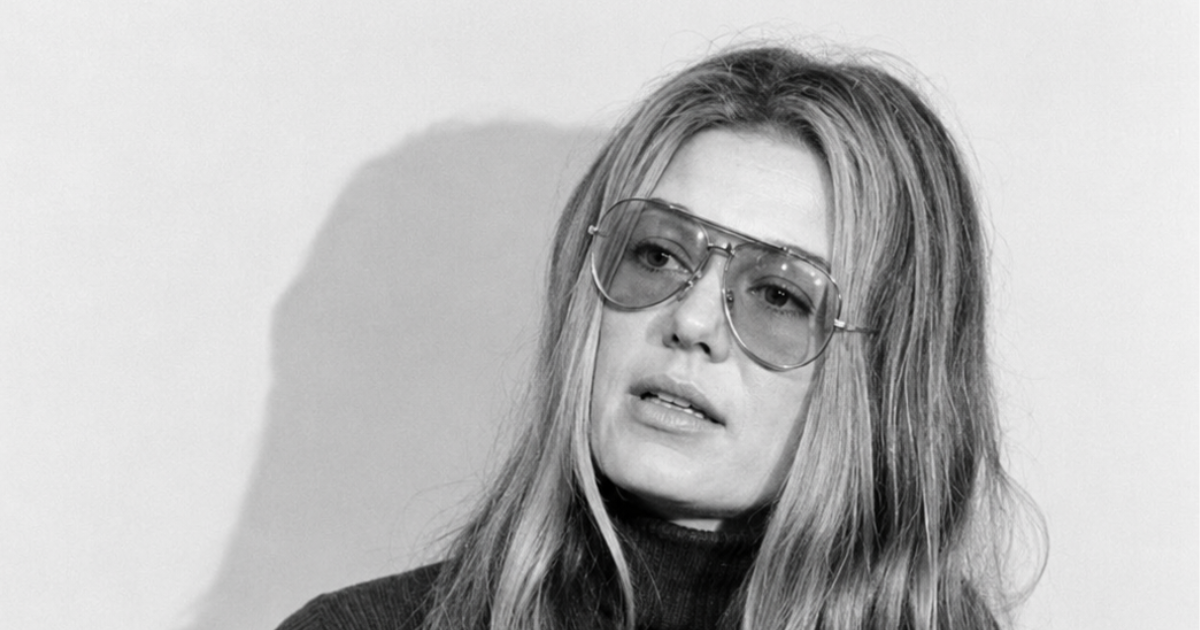
Gloria Steinem, the pioneering feminist, journalist, political activist and writer, has died aged 92. For more than six decades, she challenged sexism, fought for reproductive rights and helped transform the way women’s lives were represented in journalism and popular culture.
Steinem died on September 2, 2026, at her home in New York City. Her death marks the end of an extraordinary life — but perhaps not the end of her influence.
Her final book, An Unexpected Life, is due to be published posthumously on September 22, offering one last opportunity to hear Steinem reflect on a life spent challenging expectations and campaigning for equality.
Pre order An Unexpected Life to be released on September 22, 2026.

A Memoir
Gloria Steinem
Who Was Gloria Steinem?
Gloria Steinem became one of the most recognisable faces of the American feminist movement, but her route to becoming a global feminist icon was far from conventional.
Born in Toledo, Ohio, in 1934, Steinem spent much of her childhood travelling between Ohio and Florida with her parents. Her parents eventually divorced, and at around the age of 10 she went to live with her mother, Ruth, whose struggled with mental illness and employment would have a profound influence on Steinem’s understanding of women’s inequality.
Her childhood was unconventional, and she did not attend school regularly until she was around 11.
After graduating from Smith College in 1956, Steinem travelled to India on a Chester Bowles Asian Fellowship, spending two years there. The experience broadened her political understanding and would influence her later writing about women, poverty and social inequality.

Gloria Steinem and Abortion Rights
Long before abortion became a central part of her public activism, Steinem experienced an abortion herself while travelling in London.
She was 22 at the time, more than a decade before abortion was legalised in the United States. Years later, she would publicly discuss the experience, including at a 1969 abortion-rights speak-out in New York.
That moment helped propel her more deeply into the women’s liberation movement and reproductive-rights activism.
For Steinem, feminism was never simply about individual women succeeding. It was about changing the structures that restricted women’s choices.

Undercover Reporting
Playboy Club
A Bunny’s Tale: Gloria Steinem Goes Undercover
One of the stories that first made Gloria Steinem nationally famous was also one of the most unusual episodes of her journalism career.
In 1963, Steinem went undercover at Hugh Hefner’s Playboy Club in New York, taking a job as a Playboy Bunny.
Her resulting investigation, “A Bunny’s Tale,” exposed the reality behind the glamorous image of the Playboy empire. Steinem documented low pay, humiliating working conditions, strict physical requirements and the sexualised treatment of the women employed at the club.
The article was a sensation.
But the success came with an unexpected price. Steinem later reflected that being publicly associated with the Bunny role made it harder for her to be taken seriously as a journalist.
Yet the investigation also demonstrated something that would become central to her career: the personal could be political.

Ms. Magazine
From Journalist to Feminist Leader
In 1968, Steinem helped establish New York magazine, becoming a political columnist and feature writer. Her journalism increasingly focused on politics, social inequality and the emerging women’s liberation movement.
Then came Ms. magazine.
In 1971, Steinem joined Patricia Carbine, Letty Cottin Pogrebin and others in creating Ms., initially published as an insert in New York magazine. The first independent issue appeared in January 1972.
For Steinem, Ms. provided something the mainstream media largely failed to offer: a national platform where women’s experiences, political concerns and rights could be treated as serious subjects.
She remained an editor for 15 years and later continued as a consulting editor.
Gloria Steinem and the Women’s Liberation Movement
During the late 1960s and 1970s, Steinem became one of the most recognisable figures of second-wave feminism.
She worked alongside activists including Betty Friedan, Bella Abzug and Shirley Chisholm, campaigning for equality, reproductive freedom and greater political representation for women.
In 1972, Steinem helped establish the National Women’s Political Caucus, while her wider activism contributed to organisations including the Ms. Foundation for Women and the Women’s Action Alliance.
Her feminism also increasingly addressed the connections between gender, race, class and other forms of inequality.
Steinem’s activism was not without criticism. She faced attacks over her appearance, her politics, her media profile and even her commitment to feminism. But she continued to write, organise, campaign and speak.

Later years
A Feminist Who Refused to Retire
Perhaps one of the most remarkable things about Gloria Steinem was how long she remained politically engaged.
She continued writing and campaigning well into her 80s, addressing women’s rights, reproductive freedom, racial justice and social inequality.
In 2013, President Barack Obama awarded her the Presidential Medal of Freedom, America’s highest civilian honour.
Even in her final years, Steinem continued to write and participate in public conversations about equality.
Her death therefore feels less like the end of a career than the closing chapter of a lifetime of activism.
10 Inspiring Gloria Steinem Quotes
Gloria Steinem was also an extraordinary communicator. Her ability to reduce complex ideas about feminism and inequality to memorable sentences helped make her one of the most quoted feminist writers of the modern era.
Here are ten quotes associated with Steinem that continue to resonate:
1. “We are the women our parents warned us against, and we are proud.”
Perhaps one of her most memorable expressions of feminist rebellion. The quote captures Steinem’s rejection of the idea that women should remain within the boundaries established for them by previous generations.
2. “Needing approval is a female cultural disease, and often a sign of doing the wrong thing.”
A sharp observation about the pressure placed on women to be liked, accepted and approved of — particularly when challenging established expectations.
3. “I was angry about the human talent that was lost just because it was born into a female body.”
The quote reflects one of the central arguments of Steinem’s feminism: society loses enormous potential when people are restricted because of their gender.
4. “Without leaps of imagination or dreaming, we lose the excitement of possibilities. Dreaming, after all, is a form of planning.”
For Steinem, imagining a different society was not escapism. It was the first step towards creating one.
5. “So whatever you want to do, just do it… Making a damn fool of yourself is absolutely essential.”
A reminder that waiting until we feel completely confident can become another form of limitation.
6. “The future depends entirely on what each of us does every day; a movement is only people moving.”
This perhaps captures Steinem’s understanding of activism better than almost anything else. Social change is not created by famous leaders alone — it is created by people taking action.
7. “Empathy is the most radical of human emotions.”
A deceptively simple statement that places empathy at the heart of social change.
8. “The first problem for all of us, men and women, is not to learn, but to unlearn.”
Steinem recognised that challenging inequality requires questioning assumptions that society teaches us to accept as normal.
9. “A liberated woman is one who has sex before marriage and a job after.”
This provocative line has long been attributed to Steinem and continues to appear in collections of her quotations. However, there is an important caveat: Steinem herself said she believed she had been misquoted and did not think she had said it.
10. “The truth will set you free, but first it will piss you off.”
Perhaps the perfect Gloria Steinem quotation: funny, provocative and uncomfortable — and a fitting description of much of her journalism and activism.
What Is Gloria Steinem’s Legacy?
Gloria Steinem’s legacy is much bigger than Ms. magazine, A Bunny’s Tale or the thousands of speeches and articles she produced during her lifetime.
She helped make women’s experiences legitimate subjects for journalism and political debate.
She challenged the idea that women’s lives should be confined to the private sphere.
She helped bring reproductive rights, workplace discrimination, sexual inequality and women’s political representation into mainstream political discussion.
And she demonstrated that activism does not necessarily have a retirement age.
Steinem once wrote that “a movement is only people moving.” Her life was a demonstration of that principle.
She kept moving.
She kept questioning.
She kept writing.
And she kept encouraging other women to find their voices.
At 92, Gloria Steinem has died.
But the questions she spent her life asking — about power, equality, freedom and whose voices are heard — remain very much alive.
Further Reading: Gloria Steinem & Feminism
My Life on the Road — Gloria Steinem

Gloria Steinem
Revolution from Within — Gloria Steinem

A Book of Self‑Esteem
Gloria Steinem
The Feminine Mystique — Betty Friedan

Betty Friedan
Penguin Classics
The Second Sex — Simone de Beauvoir

Simone de Beauvoir
This article contains affiliate links, which means I may earn a small commission if you click through and make a purchase — at no extra cost to you.

Leave a Reply