

https://pagead2.googlesyndication.com/pagead/js/adsbygoogle.js?client=ca-pub-4000887400212447
For World Mental Health Day 2015, Liverpool’s creative district, the Baltic Triangle, became home to a thought-provoking art installation titled “Brainscape”. Created by contemporary artist Alison Little, this powerful work continues her ongoing exploration of mental health, disability, and the lived experiences of marginalised communities.
Alison’s artistic practice consistently challenges stigma and raises awareness around sensitive and often silenced topics such as sexual violence, psychiatric disability, and social exclusion. Through her art, she invites viewers to confront the realities faced by those living with mental health conditions — not with pity, but with understanding, empathy, and dignity.
Struggling with your mental well being, consider purchasing English Tea Shop wellness collection.
From ‘Bipolar B’ to ‘Brainscape’: A Journey of Understanding
Before Brainscape, Alison gained critical recognition for her earlier work “Bipolar B”, exhibited at the Williamson Art Gallery, Birkenhead, for World Mental Health Day. This striking installation depicted a female experience of bipolar disorder, focusing particularly on the often-overlooked subject of hypersexuality among sufferers.
The piece featured shredded paper printed with evocative words and phrases — from prescribed medication to manic elation, from illicit drugs to depression. Each strip symbolised fragments of identity and experience, interwoven within the complexity of the disorder.
Alison’s creative process was deeply informed by personal encounters with individuals living with bipolar disorder and by autobiographical literature, notably David Lovelace’s Full Blown: Me and My Bipolar Family. Through Bipolar B, Alison aimed to transform private pain into public dialogue, encouraging understanding and dismantling stigma.
Introducing ‘Brainscape’: Art, Dignity, and Mental Health Awareness
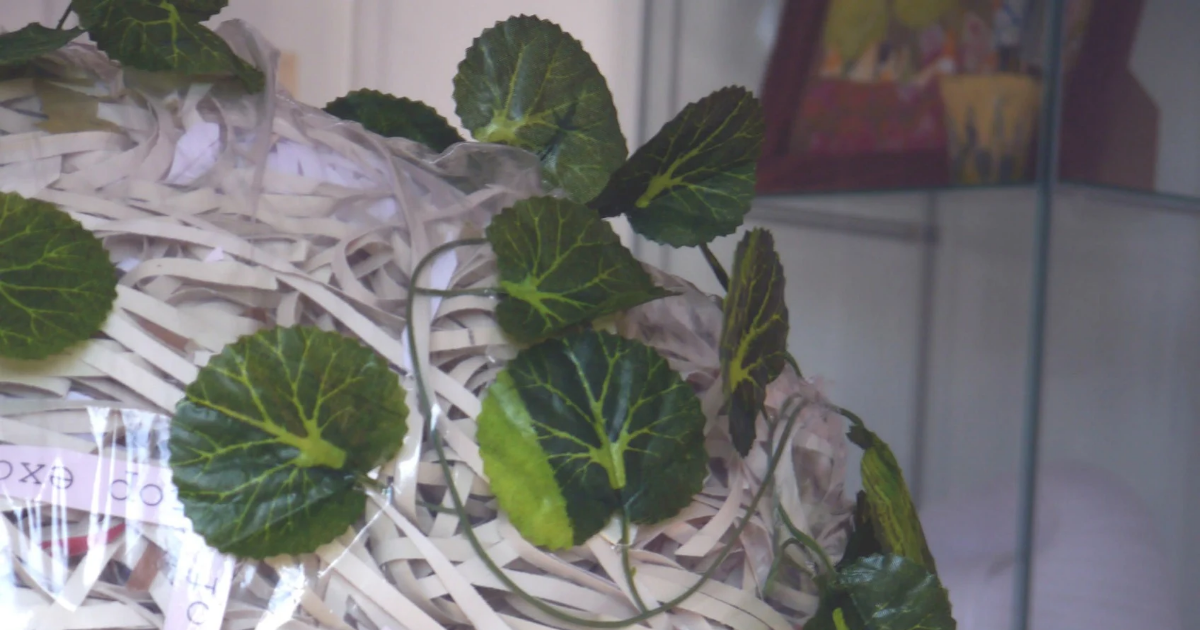
For World Mental Health Day 2015, Alison unveiled “Brainscape”, a large-scale, free-standing sculptural form representing the human mind in transformation.
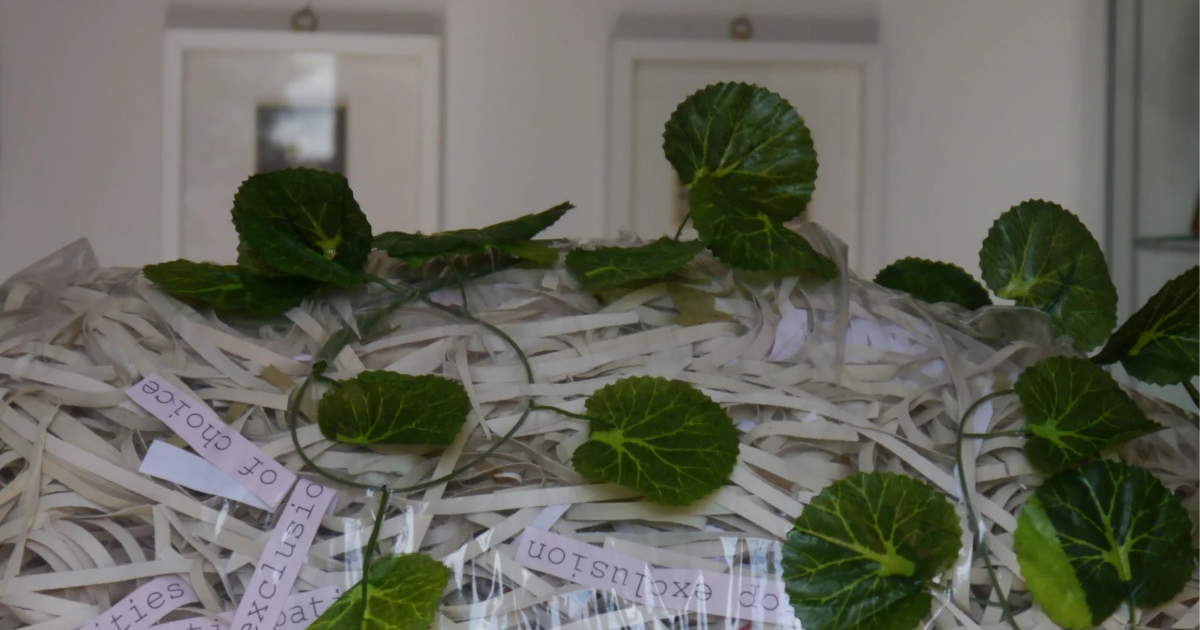
Measuring approximately 1 metre high by 0.75 metres wide, Brainscape is constructed from transparent polythene sheeting filled with shredded paper, each strip inscribed with words and phrases reflecting key themes in mental health. Phrases such as “barriers broken down,” “not a personal failure,” “dignity and rights,” “empowerment,” and “freedom of choice” weave through the sculpture, symbolising voices of resilience and recovery.
Adding a powerful natural metaphor, leaves emerge from the structure, representing growth, renewal, and healing — a testament to the ongoing process of recovery and the importance of dignity in mental health care.
The installation can be displayed either floor-based or on a plinth, adapting easily to different gallery environments. Its reflective surface and tactile layers invite viewers to engage with the piece both visually and emotionally.
Interested on working on your own creations? Jacksons offer a range of materials when can be used for all artistic purposes.
Art as Advocacy: Breaking Down Barriers
Through works like Brainscape, Alison continues to use art as a platform for mental health advocacy. Her work challenges public perceptions, encourages open discussion, and seeks to break down the barriers of stigma that too often surround mental illness.
In addition to Brainscape and Bipolar B, Alison’s wider portfolio includes other significant pieces such as Tossed (exhibited at Embrace Arts, Leicester) and Attack, both exploring trauma, mental illness, and resilience. She also continues to expand her artistic inquiry into physical disability, with further exhibitions planned across the UK.
Celebrating Dignity in Mental Health
Brainscape aligns closely with the theme of dignity in mental health — a reminder that mental illness is not a personal failure, but a shared human experience deserving of compassion, respect, and inclusion.
By combining conceptual depth, emotional truth, and material symbolism, Alison’s work transforms the conversation around mental health into something tangible — a visual and sensory reminder that healing begins with understanding.
Although the exhibition has now finished, Liverpool’s creative scene is thriving. If considering a visit, YHA Liverpool is based on the Albert Dock and within easy reach of the Baltic Triangle.
This article contains affiliate links, which means I may earn a small commission if you click through and make a purchase — at no extra cost to you.

 alisonlittleblog
Leave a comment