

https://pagead2.googlesyndication.com/pagead/js/adsbygoogle.js?client=ca-pub-4000887400212447
Tracey Emin and the Silence of Unreported Rape
Unreported rape and sexual violence remain among the most under-acknowledged crimes in Britain — and the statistics become even starker when victims come from minority backgrounds or economically disadvantaged communities. For world-renowned artist Tracey Emin, whose art and identity are profoundly shaped by experiences of trauma, class, and race, that silence is both personal and political.
Still struggling to understand the fine arts? Reed over a great introductory course.
Born on the Margins of 1960s Britain
Tracey Emin was never part of Britain’s mainstream narrative. Her mother was of Romanichal (British Gypsy) descent, while her paternal great-grandfather was a Sudanese man enslaved under the Ottoman Empire. Her father, of Turkish-Cypriot origin, already had a wife and another family when he began a relationship with Emin’s mother.
Born in 1963 in Margate, Emin and her twin brother entered a world where issues of race, class, and illegitimacy defined social exclusion in post-war Britain. These early experiences became the foundation of Emin’s confessional, autobiographical art — an art that refuses to separate the personal from the political.
“The New Black” and the Language of Exclusion
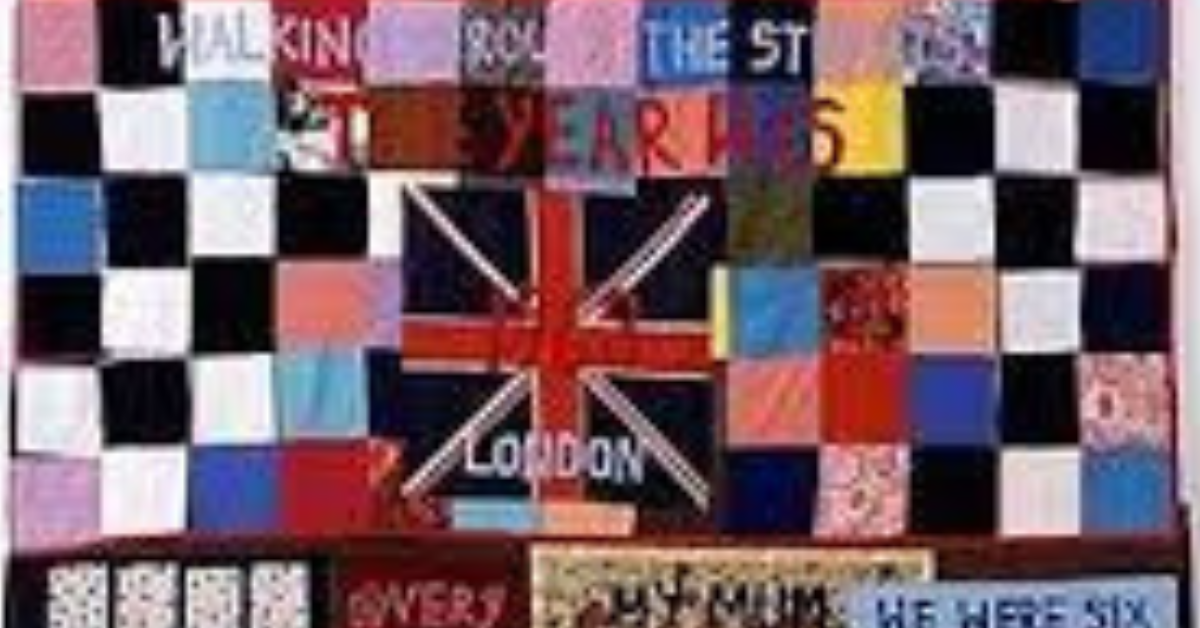
In her 2002 textile piece The New Black, Tracey Emin transforms trauma into testimony. The applique blanket identifies 1963 — the year of her birth — and layers phrases from her youth:
“They said Niger Lover” – a reflection of local hostility toward her mother’s interracial relationship.
“WOG” and “But this is England, darling” – phrases capturing everyday racism and class prejudice.
Through The New Black, Emin reclaims the language of insult as an act of defiance, turning racial slurs and social stigma into visual power. The work exemplifies her ongoing exploration of identity, shame, and survival — key themes that position her among Britain’s most significant contemporary artists.
From “Hotel International” to Social Exile
The Emin family’s brief management of the Hotel International in Margate belied its name. The small guesthouse operated as a budget bed-and-breakfast in summer and temporary housing for the unemployed during winter. When it was repossessed, Emin’s father disappeared, leaving her mother to raise the family in poverty. They squatted for years in a derelict outbuilding — a childhood marked by instability and exclusion.
These experiences of economic precarity and social exile deeply inform Emin’s later art, which often portrays vulnerability and endurance within systems that marginalise the poor and the female.
Want to know more about the marginalisation of women? Feminism for the World is a great to expand your knowledge.
Intersection of Race, Class, and Sexual Violence
Emin’s personal history mirrors broader patterns of sexual violence and social inequality. Research consistently shows that victims from working-class or ethnic minority backgrounds are less likely to report rape or receive justice. Emin herself has spoken publicly about being raped at age 13, an experience that shaped both her worldview and her artistic practice.
In works spanning installation, painting, and neon text, she transforms private trauma into a collective confrontation with the silence that surrounds sexual abuse. Her art — raw, emotional, and deeply honest — challenges social hierarchies that determine who is heard and who remains invisible.
Looking for a greater understanding of subjects covered in The New Black, Women, Race and Class is a worthy read.
Return to Margate: Art, Survival, and Renewal
After decades of acclaim and controversy in the London art scene, Tracey Emin returned to Margate — the seaside town of her childhood — to begin again. In 2021, she established TKE Studios, a vast creative hub located in a former printing works. Designed to support emerging artists, the space reflects Emin’s commitment to community regeneration and to Margate’s growing reputation as a cultural destination.
Her return paralleled the transformation of the town through the Turner Contemporary Gallery, which opened in 2011 on Margate’s seafront. Emin was an early supporter of the gallery, which has become one of the UK’s leading public art institutions, attracting international visitors and revitalising the local economy. Together, Emin and Turner Contemporary symbolise Margate’s rebirth through art — a story of working-class renewal and creative resilience.
Thinking of heading the Margate to visit the Turner Contemporary? The Nearest YHA is in Canterbury.
In 2020, Emin faced a personal reckoning when she was diagnosed with aggressive bladder cancer. After radical surgery and months of recovery, she emerged cancer-free but profoundly changed. In interviews, she described her survival as a “rebirth,” stripping away vanity and sharpening her devotion to making truthful, compassionate work. Her later paintings and sculptures, often meditations on mortality, love, and faith, reflect this new chapter of clarity and strength.
The Power of Speaking Out
From The New Black to her Margate-based installations, Tracey Emin’s art transforms autobiography into activism. She uses her own story — of rape, poverty, illness, and endurance — to expose how race, class, and gender intersect in determining whose pain is acknowledged.
By returning to Margate, building studios for other artists, and continuing to speak publicly about trauma and recovery, Emin embodies the radical power of survival. Her life and work challenge the lingering silence around unreported rape in Britain and assert the transformative force of art as confession, healing, and resistance.
Inspired the create your own artwork, gather together some left over fabrics and pick up some paints.
This article contains affiliate links, which means I may earn a small commission if you click through and make a purchase — at no extra cost to you.
Leave a Reply to Tracey Emin and Unreported Rape – alisonlittleblogCancel reply