
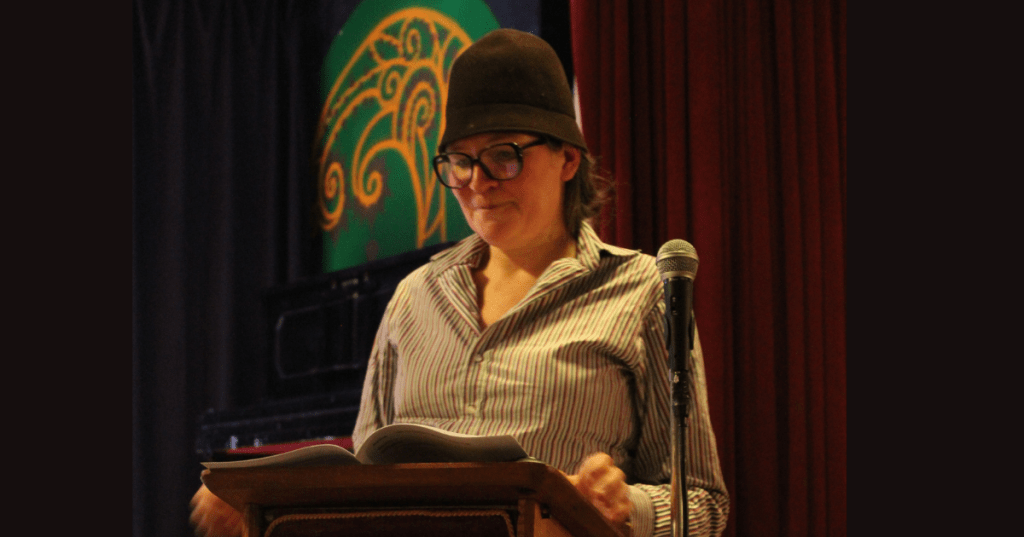
Between the Pages is a richly atmospheric work of historical fiction by Alison Little, set in the quiet refuge of the Rawdon Reading Rooms on Breck Road, Anfield—a space that would later become a public library and a cornerstone of the local community. Through delicate observation and emotional restraint, the story captures a single winter’s day in early twentieth-century Liverpool, where the soft glow of gas lamps, the murmur of newspapers, and the weight of unspoken change shape everyday life.
Rooted in themes of working-class history, women’s lives, literacy, and social change, Between the Pages explores how moments of calm and reflection exist alongside political tension, suffrage activism, and the distant rumblings of a world on the brink of upheaval. The Rawdon Reading Rooms emerge not just as a setting, but as a symbol of quiet resistance, education, and hope—where books, light, and shared silence offer dignity amid uncertainty.
The piece was performed as part of the People of Anfield celebrations at the Irish Centre on Boundary Lane, Anfield, an event that drew a large and engaged audience. The evening celebrated local history, culture, and storytelling, with musical accompaniment provided by the Socialist Singers, reinforcing the story’s deep connections to community, solidarity, and progressive thought.
Blending historical detail with intimate storytelling, Between the Pages stands as a tribute to Anfield’s social history and to the ordinary lives shaped within its reading rooms, streets, and shared spaces—where history often unfolded quietly, one page at a time.
If you enjoy historical fiction rooted in real places and communities, you may also like these related books and resources:
- Suffragette Sally, Gertrude Colmore.
- The Yellow Wall-Paper, Charlotte Perkins Gilman
- Save the Womanhood! Vice, urban immorality and social control in Liverpool, c. 1900-1976
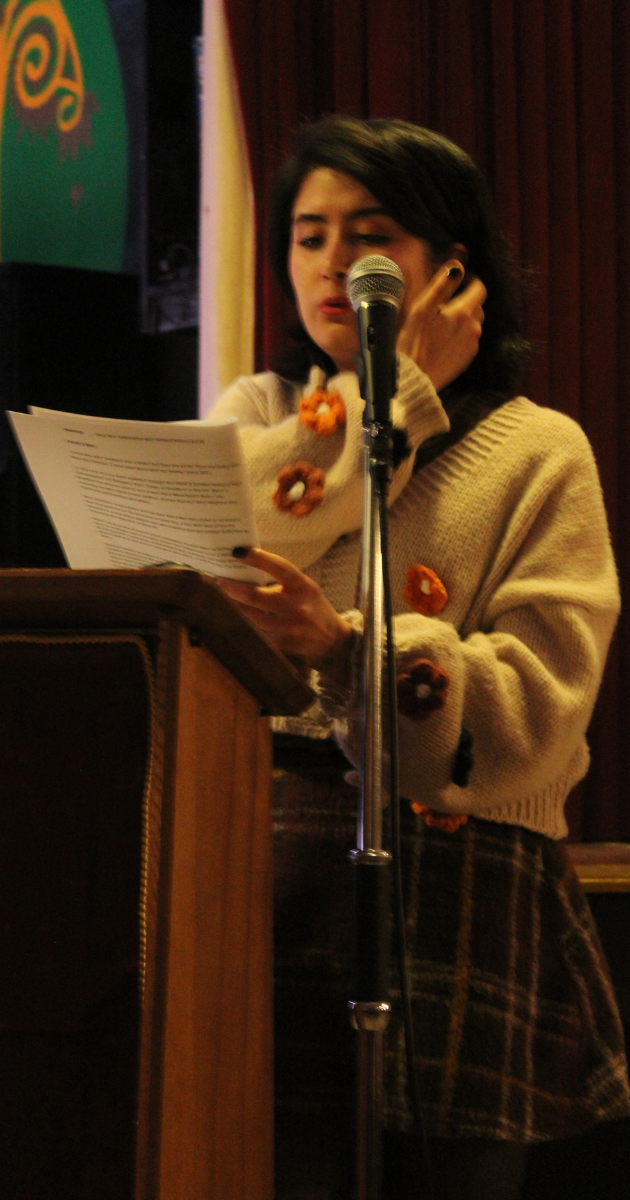
People of Anfield celebration
Between the Pages
The Rawdon Reading Room held a kind of steady brightness that surprised her every time she stepped inside. Not brilliance—just enough light to soften the edges of things. The tall windows caught whatever the morning offered, and the gas lamps added the rest, their small flames flickering only when the door opened, letting in the cold.
Sylvia blinked up at the room, already calmer from the ambience. The warmth from the coal stove spread out in a faint shimmer, and she guided the child to a table beneath one of the lamps. Its glass shade gave off a muted glow, the sort that made reading feel easier on tired eyes.
Outside, a motor-car grumbled up Breck Road, its brass fittings briefly catching the winter sun. A momentary flash moved across the window, then vanished. Motor-cars always looked out of place on this stretch of road—too heavy, too confident. She wondered again what would happen to the horses and their drivers, to the milk floats clinking along Breck Road. Everything seemed to be speeding up, as if the world were hurrying toward something uncertain.
She shifted her weight, the baby pressing against her ribs, and opens The Crux by Charlotte Perkins Gilman. The cloth cover already had faded in patches from frequent handling, most have been read by many. A familiar book—steady, like the room around her.
Sylvia settled beside her with a picture book, humming faintly. She remembers the less exciting books of her childhood, the ones given out by the Church. The gas lamp’s soft circle of light rested on the child’s hair, turning a curl or two pale for a moment before she moved again. She liked how quiet the Rawdon was, how different from the cramped house on Breckfield Road North, where walls echoed with footsteps and washing lines blocked the little daylight they had.
When the librarian stepped out to fetch coal, she slid a stack of folded suffrage leaflets beside the church notices. It was done quickly, without drama. She didn’t believe in the smashing of windows or the setting of fires—too much anger, too sudden. Change, she felt, ought to work its way in the way brightness did on mornings like this: gradually, without alarming anyone.
A man near the stove rustled his newspaper.
“More trouble on the continent,” he muttered. “It’ll spread, you mark it.”
No one answered, but the room held still for a beat, as if listening. She returned to her reading, though the printed words seemed to sit further from her than usual. Lately, talk of Europe sounded like distant thunder—rumbling in the background, not yet near, but not entirely ignorable either.
She traced a sentence with her fingertip. In the book, the women debated their prospects around a small lamp, New England not too dissimilar to a Liverpool parlour. Women’s hopes so often unfolded in the hours after work, after the days work was done—quiet moments lit by whatever lamp or candle they could spare. She understood that kind of hour.
Sylvia leaned against her shoulder, half-drowsy. She closed the book and stood, the chair legs scraping faintly against the floorboards. The gas lamp above them flickered once as she moved away, then steadied itself again.
At the door she paused and looked back. The Rawdon appeared gentle in the late-afternoon light, its windows holding a soft sheen. Men and women bent over pages, each absorbed in their own world. A calm place, a useful one.
She buttoned Sylvia’s coat and stepped outside. The day had begun to dim, the sun still somewhere behind the roofs but giving only a thin brightness now. She thought about what she’d cook for supper, how she’d stretch the leftover meat and vegetables into something warm, scouse perhaps.
Sylvia’s hand slipped into hers, small and sure.
They walked down Breck Road together, the streetlamps not yet lit but ready for evening, their glass casings pale against the sky.
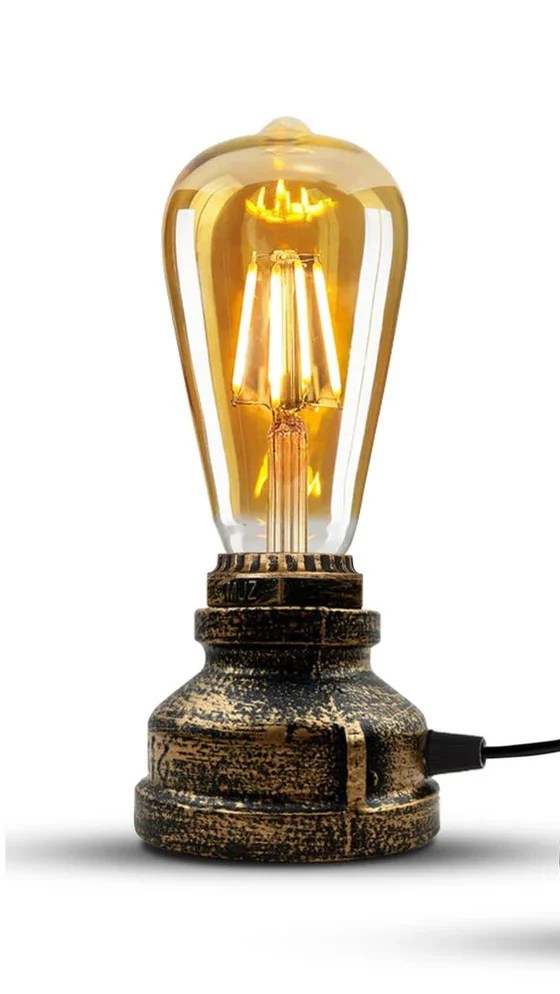
If you’d like to recreate the warm, intimate lighting of Between the Pages with the convenience of modern technology, a vintage industrial table lamp is an ideal choice.
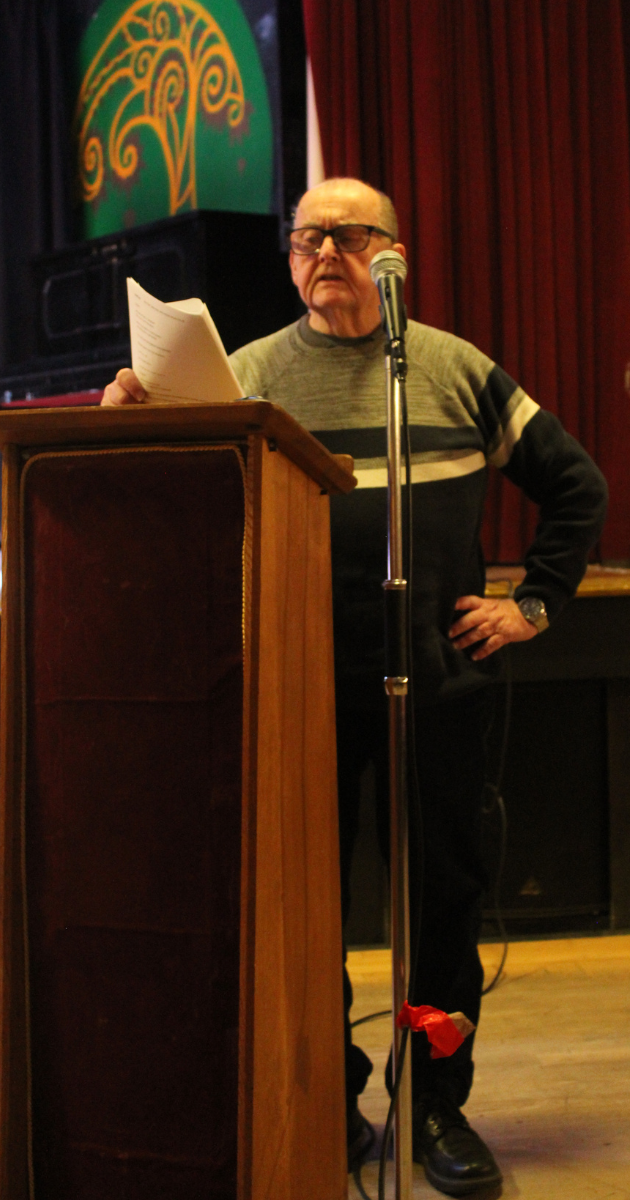
People of Anfield celebration
 alisonlittleblog
Leave a comment