

https://pagead2.googlesyndication.com/pagead/js/adsbygoogle.js?client=ca-pub-4000887400212447
Along the windswept coastline of Crosby Beach in Liverpool, visitors can discover a gallery unlike any other. This isn’t a conventional exhibition curated inside white walls, but a living, shifting gallery created by destruction, history, and the relentless force of the sea. Here, the ruins of war and industry are re-imagined by erosion, transformed into accidental works of art.
The Liverpool Blitz and Its Legacy
Between 1940 and 1942, Liverpool endured some of the most devastating bombing outside of London during the Second World War. Known as the Liverpool Blitz, the attacks caused catastrophic damage to the city:
- During the May Blitz of 1941, about 1,900 people were killed and 70,000 were made homeless.
- In Bootle, a key target close to the docks, 8,000 out of 17,000 houses were destroyed or severely damaged.
- In total, across Liverpool, Bootle, Birkenhead, and Wallasey, nearly 4,000 people lost their lives, with tens of thousands more injured.
The aftermath left Liverpool littered with rubble: whole streets of homes, shops, warehouses, and civic buildings reduced to ruins.
Dumping the Blitz Rubble at Crosby
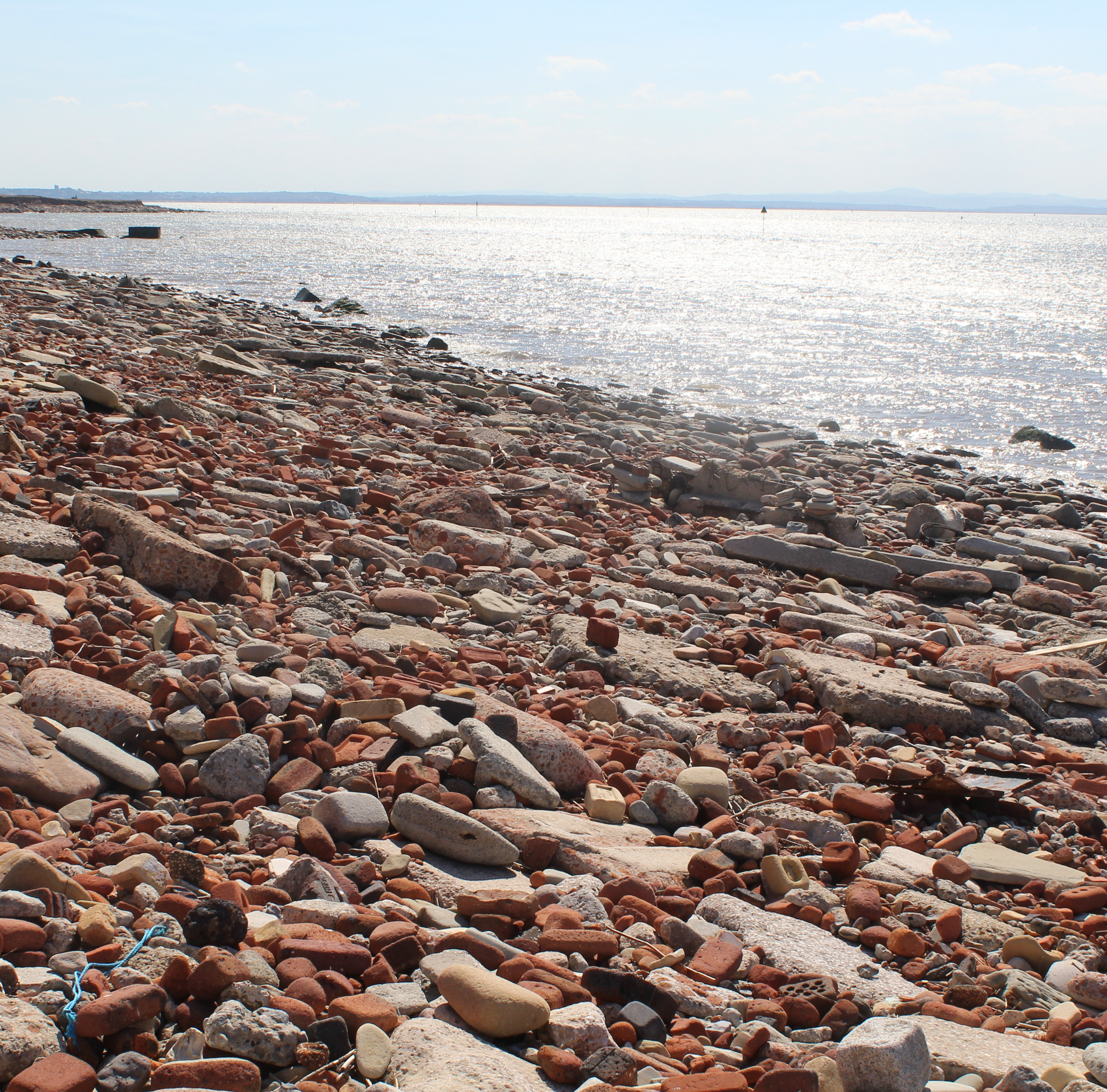
Beginning around 1942, much of this rubble was transported out of the city and dumped along the shoreline at Crosby Beach. It served a practical purpose: reinforcing the coastline, which was vulnerable to erosion, while also disposing of the mountains of debris left by the bombing.
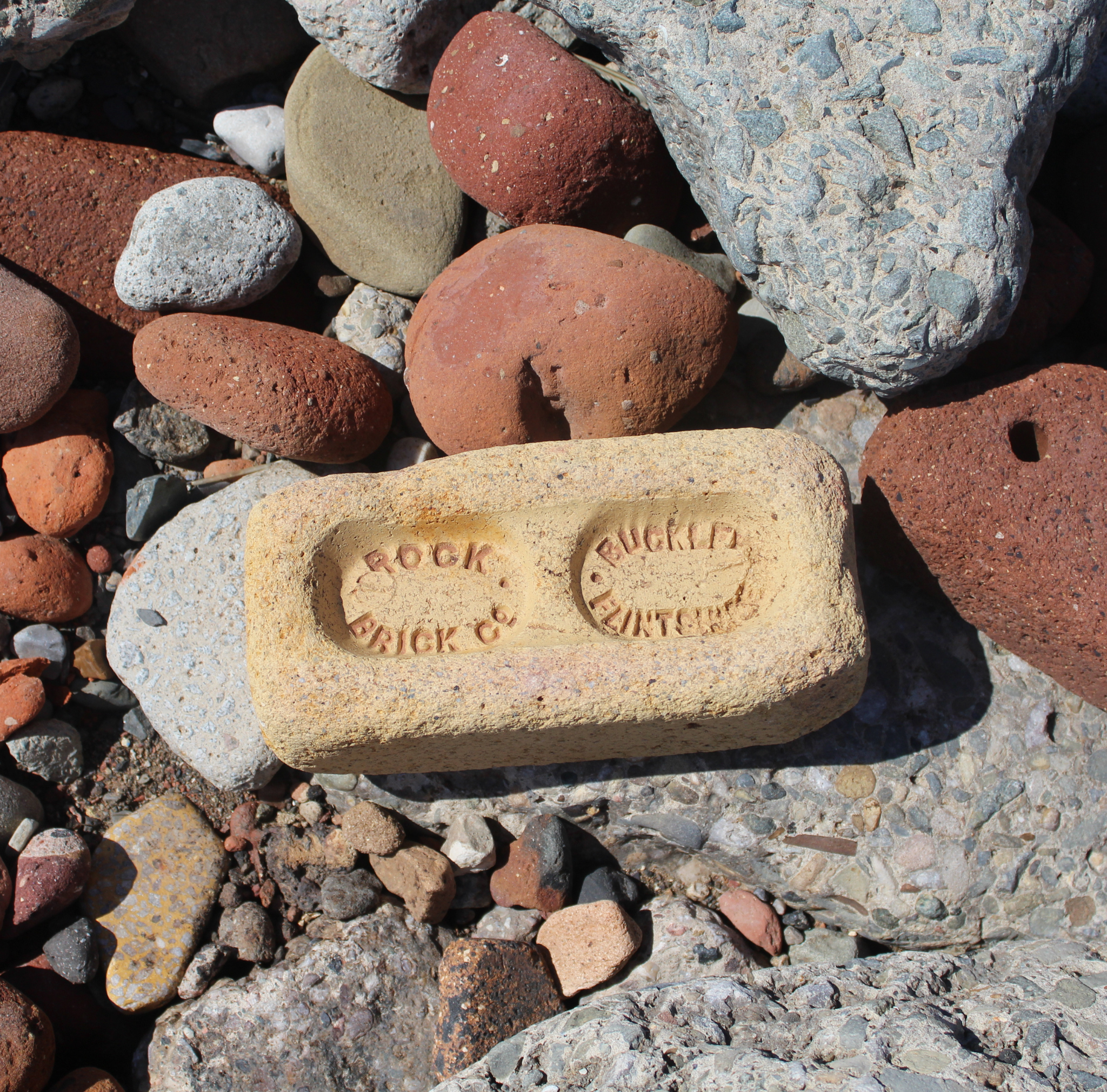
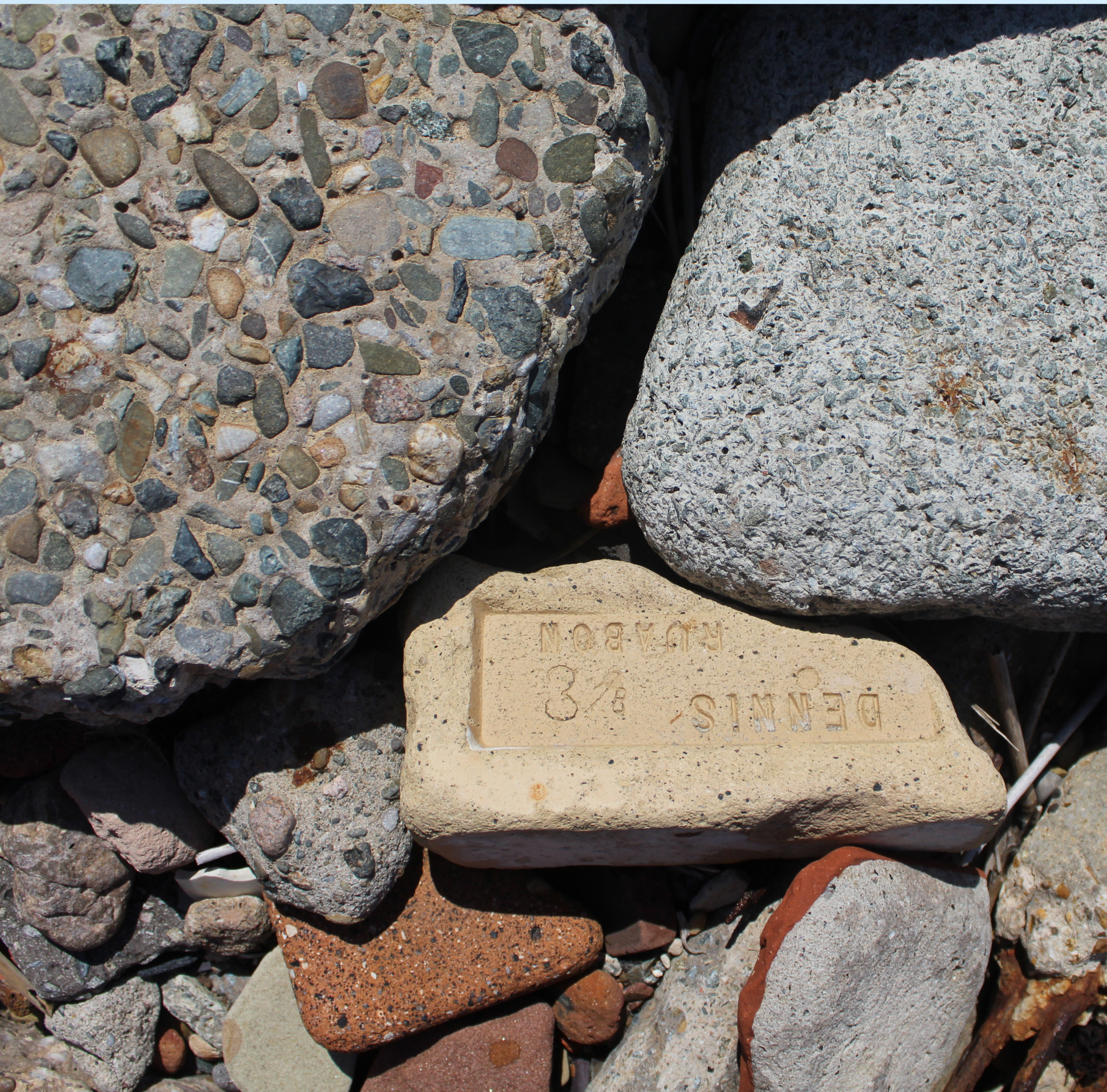
The result was a two-mile stretch of beach transformed into what many locals now call “Blitz Beach.” Bricks stamped with manufacturers’ names, carved lintels, dressed stone, fragments of walls, and intricate 1920s tilework were all swept into the sea’s reach. Over the decades, the tide has shifted and reshaped these fragments into a sprawling, open-air archive.
The Art of Erosion: Nature as Co-Curator
Walking the sands today, you’ll see how the sea has acted like an artist in residence. Bricks that once formed solid walls are now softened and rounded, smoothed into sculptural forms. Decorative tiles lie fractured like scattered mosaics. Whole chunks of facades, once part of proud buildings, have been whittled by the tide into ghostly outlines.
This erosion blurs the line between history and art, creating a gallery that is both accidental and intentional — an unconventional museum of war, memory, and nature.
Modern Waste Among the Ruins
Not all the fragments belong to the past. Mixed among the Blitz rubble are newer intrusions: plastics, foamex, and other synthetic waste. Unlike brick or stone, these materials resist erosion, persisting as stark reminders of modern consumption and pollution. They sit uneasily beside the softened relics of the 1940s, a contrast that sparks reflection on how human impact continues to shape our landscapes.
Visiting Crosby Beach: More Than Another Place
Most visitors know Crosby Beach for Antony Gormley’s acclaimed installation Another Place, with its 100 iron figures staring out to sea. But the beach holds another, more hidden gallery for those who look down as well as outwards.
From Liverpool city centre or the Liverpool YHA hostel, Crosby is an easy day trip. Stroll the shoreline at low tide and you’ll find yourself among fragments of Blitz history, reshaped into art by the natural world.
Why This Gallery Matters
The Gallery by the Sea at Crosby is not curated by human hands, yet it speaks volumes. It is at once a memorial to the Liverpool Blitz, a record of industrial craftsmanship, and an evolving artwork of erosion and transformation.
It asks us to consider:
- What counts as art?
- How does memory survive in the landscape?
- And how will future generations interpret the fragments of our own time, left scattered on the shores?
For art lovers, historians, and anyone seeking reflection, Crosby’s shoreline gallery of Blitz rubble is a powerful reminder that even from destruction, beauty can emerge — reshaped by the tide and remembered by the sea.
Local researcher Alison Little has gathered a collection of discarded Blitz rubble from Crosby Beach. Over the coming year, she plans to trace the origins of these fragments — identifying the buildings they once belonged to — and publish her findings as part of this evolving story.


 alisonlittleblog
Leave a comment