
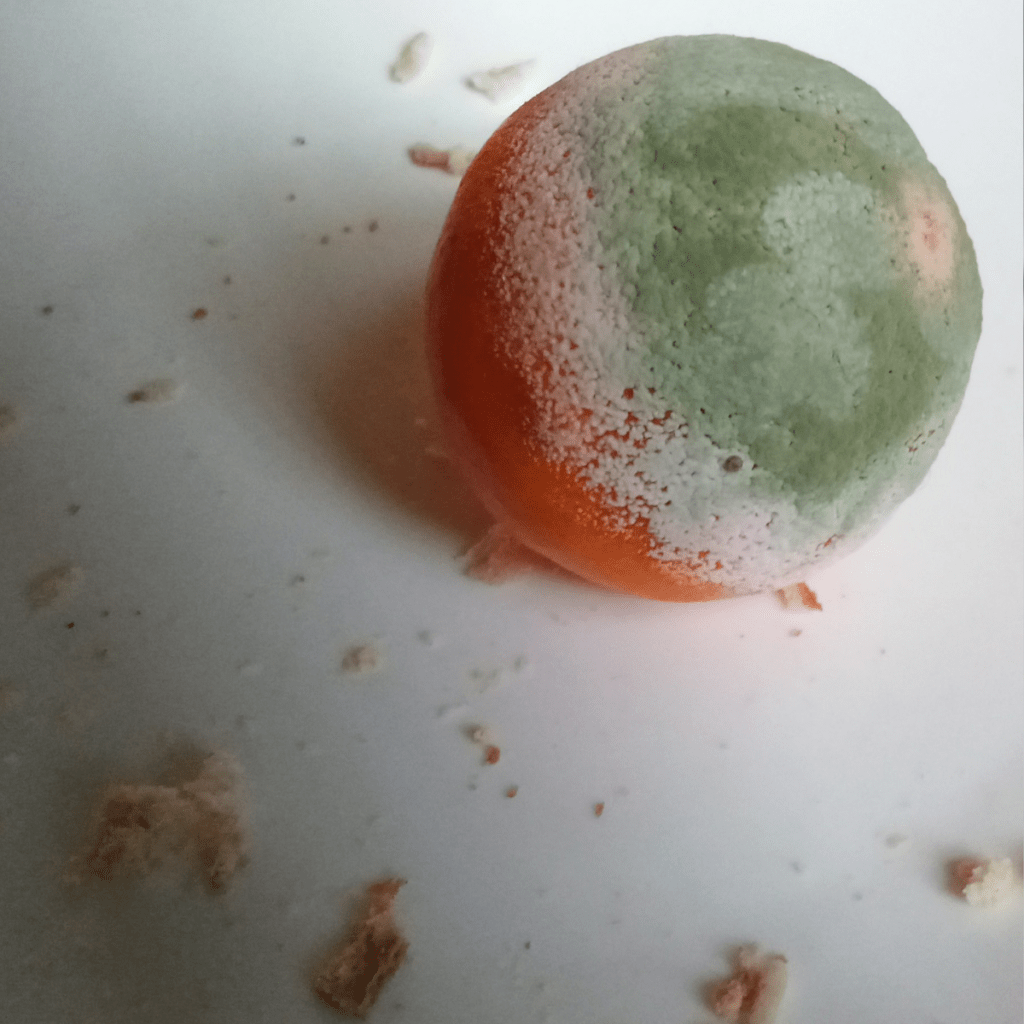
On a humble plateau of crumbs, a single tangerine rests—no longer the perfect sphere of ripened fruit, but a softened, altered form. Removed from the fruit bowl in quiet disgust, its pungent scent of damp decay lingers. Yet, in its spoiled and inedible state, the tangerine has become something else entirely: a work of accidental art.
When Spoiled Fruit Becomes Sculpture
The surface of the fruit, once a vibrant burst of orange, now carries layers of transformation. A musty, muted green spreads across its skin, interrupted by a delicate white fringe of mold, each spot creating new textures and tones. What was once meant for taste has shifted into something purely visual—an organic sculpture shaped by time and neglect.
A Tonal Exploration of Imperfection
Unlike the untouched tangerines left behind in the bowl, this one reveals a story of change. The soft blending of orange, green, and white forms an unintentional exploration of the color wheel, a reminder that beauty often lies outside the bounds of perfection. Where the fresh fruit offers nourishment, the decaying one offers reflection—a reminder that impermanence itself can be striking.
Finding Art in Everyday Decay
There is something poetic about this molding fruit. Though discarded from the table, it carries its own aesthetic value. The tangerine reminds us that decay is not only an ending but also a transformation—an opportunity to see art where we might expect only waste.
In the stillness of its spoiling, the fruit becomes more than food. It becomes a meditation on time, imperfection, and the unexpected beauty of things left behind.
https://pagead2.googlesyndication.com/pagead/js/adsbygoogle.js?client=ca-pub-4000887400212447

 alisonlittleblog
Leave a comment