
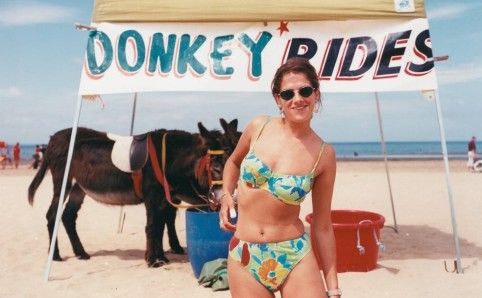
An extract from the chapter of the book I am writing, the chapter on Tracey Emin looks at the impact of growing up in Margate:
Effect of the decline of Margate on Emin’ life and creative works to date
The importance of Margate, Emin’ home town is prominent in many of Art works and life events. Margate’ heyday was the Victorian times when sea side holidays from the nearby Capital city of London were commonplace. The traditional seaside town with beach, peer and amusements were what the Victorians craved.
Margate begin life as a fishing village, in the 1820’s the steamships began coming bringing with them the gentry from London looking for fresh sea air. Mid century came the railway bringing more day-trippers from the city. At the end of the 1800’s their were 30 pleasure boats operating from the town. At the turn of the twentieth century other industries were strong in the region, there were collieries and the East Kent coal fields were at there peek. The 1930’s saw the creations of Dreamlands and the Winter Gardens, then came the lido and three cinema’s, donkey rides and deck chairs the height of what the British holiday maker wanted.
In Graham Greene’ acclaimed novel, ‘Brighton Rock’ he paints a picture of a similar coastal town to Margate: Brighton. This tells of a time of the 1930’s were day trippers packed out to the coastal towns for the Beach and entertainment that were on offer. The novel tells the story of the Whitsun bank holiday were the double decker buses were so packed with holiday makers that many has to walk to there destination. Greene’ work explores a coastal town in its glory: ice cream parlours, bars, amusements and the excitement of the British Bank Holiday. It shows a prosperous Brighton packed with tourist happy to spend money and a picture of hotels with no vacancies. In the novel Margate is mentioned:
”The present from Margate on the mantelpiece his mother’d had; from one sea to another, a change of pier.”
Drawing strong parallels between Brighton and Margate, situated not far along the coast from each other, towns which resin ate around tourism and the Pier. This reflects Britain of the 1930, coastal towns were people went on honeymoon to, days before package holidays and the current trends towards cheap fights, Easy-jet and other budget airlines offering the continent for minimal amounts.
Brighton managed to survive to economic changes, a town which grew into a city re-eventing itself as a cultural haven and city break destination. However Margate suffered greatly from the 1960 uptake of package holiday’s abroad, the traditional tourist base dried up. Margate’ grand hotels went out of business, Large Georgian and Victorian properties were sub-divided into low cost accommodation. The Local Authority filled empty boarding houses with social security claimants. On the turn of the Millennium several London Borough’s began to re-house vulnerable people in the town due to the availability of cheaper house. The in-migrate from groups such as: substance misuser’s, ex-offenders and people with mental health problems lead to spiralling problems within the Kentish coastal resort. Higher levels of deprecation, child poverty, drug addiction and educational failure. In 2010 one in four people of working age were on benefits, recession had hit Margate hard. Not only had Woolworth and River Island gone, but the high street staple Marks and Spencer had been forces to close. The high Street was littered with clusters of vacant units, charity shops and £1 stores becoming commonplace. This was an acute case of high Street decline worsened by the effects of the Out-of-town shopping complex: Westwood Cross. Closes in the Pfizer (Pharmaceutical company) lead to 2400 redundancies and the eventual closure of Dreamlands aspirated the deprivation.
Evidence of the depravity of Margate is evident in Emin’ artworks and her writings. In the biography, Strangelands we learn who her early years they were relatively prosperous her family owning a hotel themselves. However the decline in tourism lead to the closure of the Hotel International and to some degree they were virtually homeless in there new accommodation. Works such as ‘Why I never became a dancer’ show the sleaziness of the coastal town, the tent seem to explore a kind of tourism through its presentation of a promiscuous lifestyle. Works from her photo album show Margate in the decay, the beach huts decapitated, painting a town which was certainly past its best.
However, the town which helped to create Emin’ works has also seen benefits from Britain’ leading female Artist. In 2011 Margate saw the opening of ‘The New Turner Contemporary Gallery’ in which it showcased Emin’ work. The Gallery was a £17.5 million new build intended as an arts led re-generation project. This lead the way for investment in Margate, Moonbow Jakes Arts Café and Lido night club an immediate consequence of the development. A change in government attitude meant more investment in housing renewal, plans for Dreamlands re-opening and investment in the high Street. The building of London Array, the off-shore wind farm led to more employment opportunities and improved rail connections meant 90minute commute to London. The gallery and contemporary artist such as Emin have earmarked a change in Margate which has become a new destination for cultural tourist.

 alisonlittleblog
Leave a comment